Before the Meeting, the Consensus: Japanese Etiquette Quietly Rewiring the American Workplace
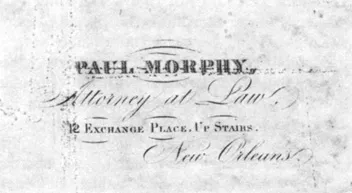
Photo: Unidentified printer in employ of Paul Morphy, Public domain, via Wikimedia Commons
Walk into a venture-backed startup in Manhattan or a law firm in Chicago, and you may notice something unexpected: meetings that end with decisions already made, business cards treated with unusual care, client experiences engineered down to the smallest gesture. These are not accidents. They are the visible fingerprints of Japanese business etiquette on American corporate culture.
The influence has flowed quietly, often without attribution. But for US professionals who work with Japanese partners — or simply want a more deliberate way of doing business — understanding these customs has become a genuine professional asset. Here are five practices reshaping how Americans work.
1. Nemawashi: The Meeting Before the Meeting
Literally translated as "preparing the roots" of a tree before transplanting, nemawashi is the practice of building consensus through informal, one-on-one conversations before any formal decision is made. By the time the official meeting occurs, the outcome is all but certain — because every stakeholder has already been heard.
American professionals often mistake this for slowness or political maneuvering. It is neither. Nemawashi is risk management for human systems: it surfaces objections early, in private, where they can be addressed without anyone losing face. US companies adopting the practice report that meetings become shorter and decisions become stickier, because no one leaves the room committed to undermining the outcome.
Practical tip: Before your next significant proposal, schedule brief individual conversations with every stakeholder. Present your thinking, invite dissent, and revise. The formal meeting should confirm consensus, not discover conflict.
2. Meishi: The Business Card as a Document of Respect
The ritualized exchange of business cards — meishi — may be the most visible Japanese custom in American professional life. In Japan, cards are presented and received with both hands, read carefully, and placed on the table for the duration of the meeting. To stuff one into a back pocket is a small but genuine insult.
American adoption has been selective but real. Executive coaches now teach card etiquette to professionals preparing for negotiations with Tokyo-based firms, and the broader lesson has spread: the way you handle the small tokens of a first encounter signals how you will handle the large ones. A card received attentively is a promise that the person behind it will be treated the same way.
Practical tip: When meeting Japanese counterparts, carry crisp, bilingual cards, present them with both hands and the text facing the recipient, and never write on a card in someone's presence.
3. Omotenashi: Service That Anticipates Rather Than Reacts
Omotenashi describes hospitality so attentive that the guest never has to ask. Rooted in the Japanese tea ceremony, it means anticipating needs before they are expressed — and doing so without expectation of thanks.
American client services have absorbed this idea with enthusiasm. Premium hospitality brands, private banks, and even healthcare systems now train staff in anticipation-based service: noticing that a client's flight lands at 4 p.m. and having the car ready at 3:40, without being asked. The distinction from standard American customer service is subtle but profound — omotenashi is proactive and invisible, not reactive and performative.
Practical tip: Audit your top five client touchpoints. At each one, identify a need the client has never mentioned but always experiences. Meet it silently.
4. The Ringi Decision Cascade: Bottom-Up Buy-In
Closely related to nemawashi is the ringi system, in which a proposal travels upward through an organization, gathering endorsements at each level before reaching final approval. Decisions arrive at the top pre-ratified by the people who must execute them.
American startups, ironically, may be the custom's most natural heirs. Founders burned by top-down mandates that teams quietly ignored are experimenting with written proposals that circulate for comment before adoption — a practice popularized in Silicon Valley and unmistakably ringi-adjacent.
Practical tip: Replace one executive decision per quarter with a circulating written proposal. Track how implementation speed compares.
5. Aisatsu: The Discipline of the Proper Greeting
In Japanese workplaces, aisatsu — the formal greeting — marks the beginning of every relationship, meeting, and even workday. Junior employees greeting senior colleagues each morning is not ceremony for its own sake; it renews the social contract daily.
American offices have no true equivalent, but the rise of deliberate opening rituals — a moment of acknowledgment before virtual meetings, a standing practice of greeting the team in person — reflects the same instinct. Relationships, the Japanese insight holds, are not built in the meeting. They are built in the moments around it.
Practical tip: Open your next client meeting with a genuine, unhurried acknowledgment of the person before the agenda. Watch what it changes.
Etiquette as Strategy
Skeptics will call these customs formalities. Practitioners — American and Japanese alike — know better. Behind each ritual lies a coherent theory of business: that trust is infrastructure, that consensus outperforms command, and that respect, practiced consistently, is the cheapest and most durable competitive advantage available. American companies are not adopting Japanese etiquette. They are discovering, four centuries late, that it was never merely polite. It was always strategic.