Claimed, Not Processed: The Izakaya Welcome American Onboarding Forgot

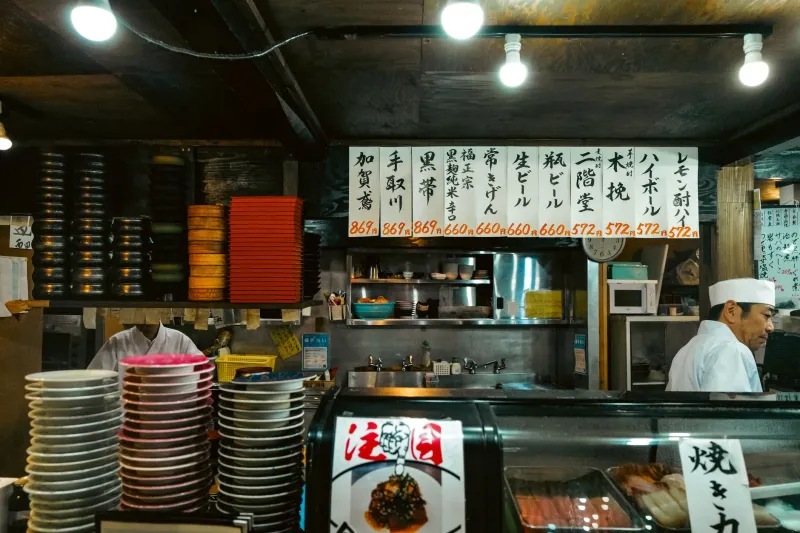
Stand outside a busy izakaya in Osaka just before the dinner shift and you will notice something American workplaces rarely stage: the arrival of a new employee is not a quiet affair. The manager introduces the newcomer to the kitchen first, then the floor staff, then the regulars who happen to be seated early. A senior colleague—chosen deliberately, not randomly—is named as their guide. By the end of the first week, everyone in the building can say the new hire's name, and the new hire can say theirs.
Contrast this with the standard American onboarding experience: a stack of I-9 forms, a forty-minute compliance video, an email chain about badge access, and a first-day lunch that may or may not happen depending on the manager's calendar. The new employee is processed. Nobody would describe them as claimed.
The Difference Between an Audience and a Witness
The izakaya model rests on a simple insight: belonging is not felt, it is witnessed. When a new hire is introduced by name to the entire team—individually, face to face, with a sentence about who they are—the introduction functions as a public claim. The team now has a stake in this person. Ignoring them later would require effort.
American onboarding, by contrast, tends to route newcomers through systems rather than people. The orientation session, often a quarterly group event attended by strangers from a dozen departments, optimizes for efficiency. What it quietly communicates is that the company is large, the individual is interchangeable, and the first week is an administrative hurdle rather than a threshold.
Research on early attrition bears out the cost. A significant share of employees who quit within the first ninety days report that they never felt a connection to their team—never learned who to ask, never had a moment where the room seemed to register their presence. The paperwork was flawless. The welcome was absent.
What the Ritual Actually Consists Of
Strip the izakaya welcome down to its components and you find four moves, none of which require a cultural translation manual to adopt.
First, the named senior. Every new hire in a traditional Japanese restaurant is attached to a specific sempai—a senior whose explicit job is to teach, answer, and vouch for the newcomer. This is not the American 'buddy,' an afterthought assigned the morning of day one. It is a role with weight, chosen for temperament and proximity, and everyone knows who holds it.
Second, the by-name circuit. The newcomer meets the team one person at a time, not as a grid of faces in a slideshow. Each introduction includes a detail: who this person is, what they do, why they matter. The new hire is not just informed—they are endorsed.
Third, the public acknowledgment. In many shops, the new employee is introduced during morning assembly, standing at the front. It is brief and slightly uncomfortable, which is precisely the point. Discomfort signals significance. The team remembers what it witnessed.
Fourth, the first-week follow-through. The manager checks in not on paperwork but on integration. Has the newcomer eaten with colleagues? Do they know where they fit? The question is never 'Did you finish the training module?' but 'Do you feel part of this yet?'
American Experiments With the First Day as an Event
A quiet number of US companies—particularly in hospitality, healthcare, and mid-market professional services—are testing versions of this. One regional restaurant group in the Pacific Northwest scrapped its orientation webinar for a 'first shift as ceremony': the new cook works alongside a named mentor, is introduced to the full brigade before service, and ends week one with a sit-down meal cooked by their own team.
An HR director at a Midwest credit union described the shift this way: 'We realized our onboarding answered every question except the one new hires were actually asking, which is, do these people want me here?' Her team now requires managers to complete a by-name introduction circuit in the first three days and to send a short note to the new hire's household—a practice borrowed, she admits, from a Japanese client's practice of formally acknowledging an employee's family.
The early results these leaders report are consistent with what the izakaya model predicts: faster time-to-productivity, but more importantly, faster time-to-belonging. New hires who can name ten colleagues by the end of week one behave differently than those who can name three.
A Framework for the First Week
For American organizations ready to borrow the ritual, the structure is straightforward.
- Before day one: assign the named senior and brief them on the responsibility. It is a role, not a favor.
- Day one: replace the packet drop with the by-name circuit. Manager walks the new hire through the team personally.
- Week one: stage one public acknowledgment—a team meeting introduction, a stand-up moment, something witnessed.
- End of week one: the manager asks the belonging question directly, and acts on the answer.
None of this requires new software. It requires deciding that the first week of employment is an event with meaning, not a queue of forms.
The izakaya's welcome works because it treats a new employee the way it treats a first-time guest: as someone whose arrival changes the room. American companies have spent decades getting better at processing people. The organizations winning the retention battle are the ones learning to claim them.