The Third Purchase: Where a Kyoto Confectionery Says a Customer Relationship Truly Begins
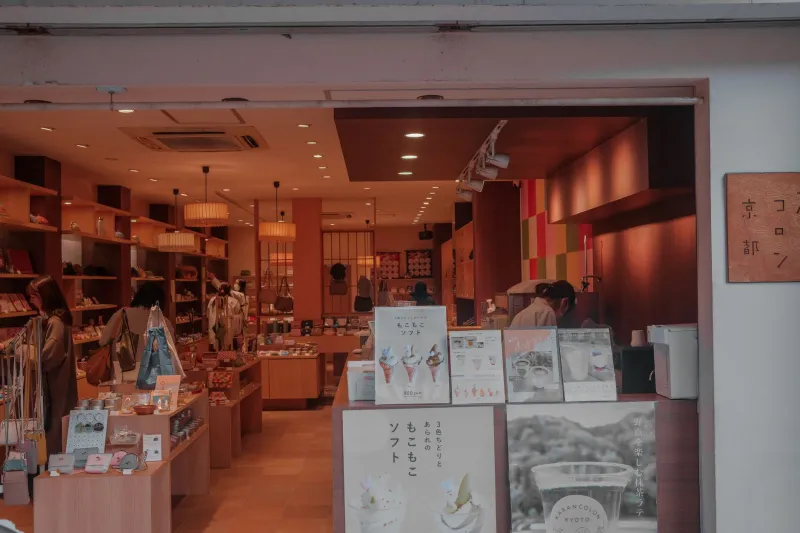
In a narrow shop near Kyoto's Nishiki Market, a confectionery founded in the early 1800s keeps a practice that would look strange on any American KPI board. When a customer buys wagashi for the first time, the staff are gracious but measured. The second purchase earns warmth. It is the third purchase that changes everything: the clerk begins to remember preferences, the wrapping becomes personal, and the customer is, in effect, welcomed for the first time.
Two purchases, in other words, are considered browsing. Three is a relationship.
American business rarely thinks this way. Our entire commercial vocabulary is built around the first transaction—acquisition, conversion, onboarding—as though the moment a credit card is swiped, something meaningful has been established. The Japanese confectionery's counterintuitive timeline suggests otherwise, and the implications for US companies are more practical than philosophical.
The First Sale Tells You Very Little
Consider what a first purchase actually proves. It proves curiosity, a promotional impulse, a seasonal gift need, or a moment of convenience. In the American market, where switching costs are low and attention is scarce, a first purchase is closer to a first date than a marriage—and yet most companies allocate their celebratory energy there. Welcome emails, discount codes, onboarding sequences: all engineered for a milestone that predicts almost nothing.
The Kyoto shop's logic inverts this. The first sale is the customer's gamble, not the company's achievement. The second purchase tests whether the experience held. Only the third purchase—made after the novelty has faded, after the customer has had every opportunity to drift to a competitor—constitutes a genuine decision. By then, the customer knows the product without the honeymoon glow and chooses it anyway.
American data quietly supports this folk wisdom. Subscription businesses have long observed that churn risk collapses after the early billing cycles. E-commerce analysts speak of the "loyalty cliff" around the second and third orders. The confectionery simply formalized what our spreadsheets hint at: the real customer begins where the casual one ends.
Redefining the Milestone Changes the Spending
If the third purchase is the true beginning, budgets should be rebalanced accordingly. Today, the typical American company pours the majority of its marketing spend into the top of the funnel—advertising to strangers—while the customer who has already bought twice is treated to a generic newsletter. The arithmetic is backwards. The second-time buyer is the cheapest, most reachable prospect the company will ever have, and she is being ignored in favor of audiences that will mostly never convert.
Reframing around the third purchase suggests three concrete shifts:
Treat the second sale as the acquisition event. Win-back campaigns, thoughtful follow-ups, and quality checks belong here, not after. A hand-written note or a personal check-in after purchase two costs a fraction of a new-customer ad campaign and carries far more weight.
Build onboarding that spans three transactions, not one. Most American onboarding ends at activation. The confectionery model suggests an arc: the first purchase should be low-friction, the second should demonstrate the company's memory of the customer, and the third should feel like admission into something—a preference remembered, a suggestion anticipated, a recognition that is unmistakably personal.
Measure tenure, not conversion. A dashboard organized around third-purchase rates asks better questions than one organized around first-purchase volume. It asks whether the product, the service, and the relationship are actually built to last.
The Cultural Lesson Beneath the Commerce
There is a deeper reason the Kyoto model works, and it is cultural rather than tactical. In traditional Japanese commerce, a relationship is something accumulated—season by season, purchase by purchase, favor by favor. Trust is not granted at the register; it is compounded over time. The shopkeeper who treats a third-time buyer as new is not being slow to warm up. She is acknowledging that familiarity must be earned before it can be honored.
American business culture, by contrast, tends to front-load intimacy. We call customers "family" after one purchase. We ask for reviews, referrals, and loyalty-program signups within minutes of a first transaction. The effect, for many customers, is the commercial equivalent of a stranger using a first name too soon: pleasant on the surface, faintly transactional underneath.
The confectionery's restraint reads, to American eyes, almost as indifference. It is the opposite. By reserving its deepest attentiveness for the proven customer, the shop makes that attentiveness meaningful. Not everyone gets the remembered preference or the seasonal recommendation. That scarcity is precisely what makes loyalty feel like an achievement rather than a default.
What It Looks Like in an American Company
None of this requires a two-hundred-year history. A US software firm could mark a customer's third renewal with a personal call from someone who is not in sales. A retailer could train associates to quietly note the third visit and shift from scripted service to genuine conversation. A restaurant group could comp nothing and announce nothing, but simply begin remembering—a table, a preference, a name—once a guest has proven they keep coming back.
The discipline is in the restraint. The point is not to add another automated loyalty tier. It is to move the moment of genuine welcome downstream, to a point where it can be trusted.
The Kyoto shop has outlasted wars, recessions, and a century of retail upheaval by refusing to count its customers before they have chosen it three times. American companies, forever optimizing for the first yes, might discover that the more valuable question is not how many customers they won this quarter—but how many they kept long enough to truly meet.