Send the Invoice When the Rice Is Milled: The Craft Case for Billing After Value Lands
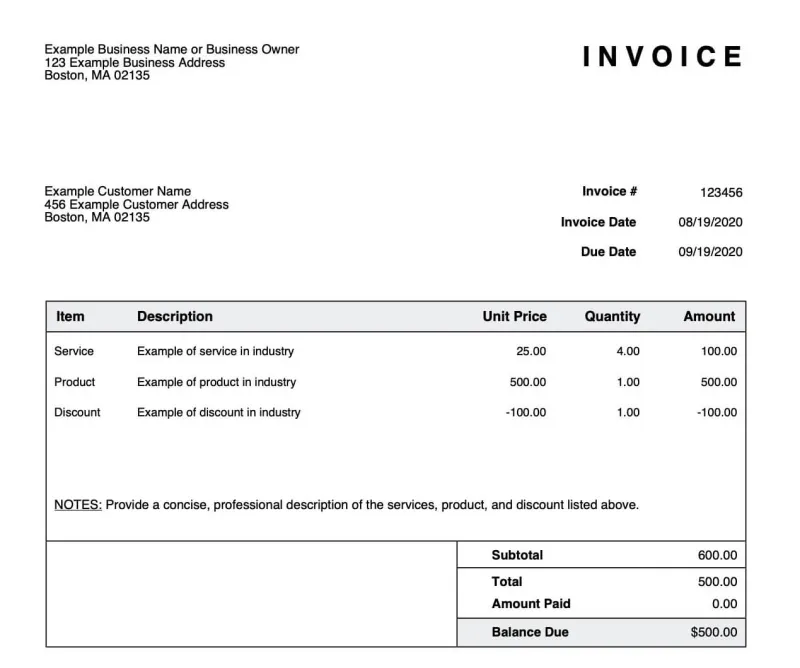
Photo: invoice and calculator on wooden desk in craft studio with finished ceramic work and papers, via www.skynova.com
The correspondence is unremarkable and therefore telling. A commission for a set of fittings, accepted in the winter, delivered in the autumn. A deposit was taken at the start, as it always was. The balance, however, was invoiced only after the customer's own carpenter had installed the pieces and written to confirm that they fit.
Read carelessly, this looks like sentiment, or worse, like a firm with no leverage. Read carefully, it is a claim about where risk sits. The workshop carried the uncertainty of its own work until the work had demonstrated that it deserved to be paid for.
The Invoice Is a Sentence in the Relationship
A price states what a firm believes its work is worth. Timing states who the firm believes should absorb the doubt. Bill entirely in advance and the message is that the risk belongs to the client. Bill at the end and the message is that the firm is prepared to carry it. Neither message is free, and neither is universally correct.
American service firms rarely discuss this. Invoices are treated as an accounting event, scheduled by the contract and executed by software. Yet clients read them as communication, and the reading is not naive. A company's billing behavior is one of the few signals it cannot easily fake.
Why the Harvest Comes Before the Bill
Three reasons support the craft habit, and none of them require a patron class or a leisurely balance sheet.
First, the invoice is part of the service, not a preamble to it. A well-timed bill closes the engagement cleanly: here is what was delivered, here is what it cost, here is what happens next. Sent too early, it interrupts. Sent at the right moment, it completes.
Second, billing after value has landed converts a claim into a confirmation. When a client has already used the system, shipped the product, or read the report that solved the problem, the invoice is arithmetic rather than argument. Disputes decline sharply when the person approving payment has already experienced the outcome.
Third, and least obviously, the practice forces a firm to define what value landing actually means. You cannot wait for something you have not named. The discipline of identifying the moment of proof sharpens scope, acceptance criteria, and the language of every proposal that follows.
The American Constraint
It would be dishonest to transplant the habit whole. American service firms run payroll every two weeks. A workshop with a single long-standing patron faced a different balance sheet, and the romance of patient billing has bankrupted more than one well-meaning studio on this side of the Pacific.
There is also a cultural asymmetry. Net-thirty already stretches in practice, and a final invoice sent weeks after delivery is a final invoice sent into a queue that has forgotten why it matters. Patience, in the American market, is only sustainable when it is bounded.
Three Mechanisms That Preserve Both
Milestone billing tied to evidence, not to dates
Replace calendar billing with evidence billing. Invoice on the delivered artifact: the audit accepted, the prototype approved, the migration signed off, the training completed. Each milestone produces a modest invoice and a documented justification. Cash keeps moving, and every bill arrives attached to something the client already knows happened.
The trust deposit, named honestly
A deposit is not a tax on trust if the firm says what it is for. Reserving capacity. Purchasing materials. Beginning work that cannot be paused. One clear sentence at the proposal stage removes the resentment that ambiguity creates, and it protects the firm during the very period when patience is most expensive.
The closing invoice that travels with the closing document
Bundle the final invoice with the handover: the summary memo, the documentation, the walkthrough. And send it promptly. A firm that is unhurried about its first invoice should never be slow about its last. Delay at the end reads as disorganization, which undoes whatever goodwill the earlier patience earned.
What the Timing Says About the Price
Clients draw one of two conclusions from a firm that bills at the end. Either it is confident or it is cash-poor, and the difference is visible in behavior. Confident firms invoice promptly and precisely once the value lands, with no surprises and no apology in the covering note. Cash-poor firms invoice vaguely, follow up awkwardly, and reveal that the timing was never a philosophy but a hope.
When Patience Becomes Exposure
The practice breaks in three predictable places: scope that keeps expanding, clients who never quite acknowledge that the value landed, and projects with no defined end. Each requires a boundary written into the scope document rather than negotiated after the fact.
The most useful clause is short. The final invoice is issued upon delivery of a named deliverable, and if formal acceptance has not occurred within thirty days of delivery, the invoice is issued on the thirtieth day regardless. That single line permits patience without exposure. It says the firm will wait for proof, not indefinitely.
Retainers run the other way. Where value is continuous rather than cumulative, bill at the start of the period, because the client is buying availability rather than a finished object.
The real question is not whether to bill early or late. It is whether the invoice arrives as a claim or as a confirmation. The rice is milled, the customer has tasted it, and the bill is a formality. That is the invoice worth sending.