One Dish, Two Centuries: The Case for a Narrower Strategy
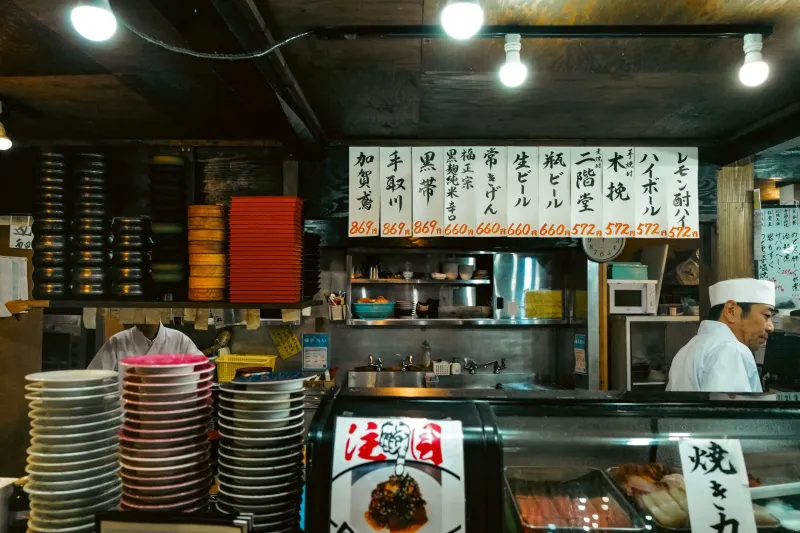
Walk into a two-hundred-year-old restaurant in Kyoto or Osaka and you will likely be handed a menu you can read in under a minute. One signature dish. Perhaps a handful of seasonal variations. A choice of grade, a choice of size, and that is all. The proprietors of these establishments—many of them shinise, or long-standing businesses that have outlived empires, wars, and countless fads—have watched ramen booms, coffee crazes, and fusion trends come and go. They declined all of them.
American founders, raised on the gospel of the pivot, tend to read this as stagnation. It is worth arguing the opposite: restraint may be the most underrated growth strategy in the American toolkit.
The Sprawl Problem
The modern startup playbook treats expansion as proof of vitality. A company raises a Series A and immediately ships a second product line, a third pricing tier, an adjacent market. Each new offering feels like ambition. Collectively, they are often something else: a diffusion of the very thing that made the company worth betting on.
The pattern is familiar enough that it barely needs describing. The SaaS company that began as an excellent invoicing tool becomes a mediocre 'financial operations platform.' The restaurant that made one unforgettable dish adds a eleven-page laminated menu. In both cases, quality was not scaled—it was diluted.
The old restaurants of Japan understood something about this that modern strategy decks tend to obscure: every addition to the menu is a subtraction from the kitchen. Attention, ingredients, training, and pride are finite resources. Spreading them thinner does not create more of them.
Focus as a Compounding Asset
What a narrow menu actually buys is compounding. A restaurant that has perfected one dish for five generations has accumulated two centuries of micro-improvements—better stock, better knife work, better supplier relationships, better training of apprentices. A competitor chasing every trend starts each year from zero.
The same math applies to American businesses. A company that refuses to chase adjacent opportunities concentrates its learning curve. Customer feedback sharpens one product instead of fragmenting across five. The brand comes to mean one thing, which is the precondition for meaning anything at all.
Consider how many beloved American companies fit this model: In-N-Out Burger, with a menu that has barely changed in seventy years. Southwest Airlines, which spent decades flying one aircraft type. Their focus was not a lack of imagination. It was a refusal to trade excellence for optionality.
The Courage to Decline
None of this is easy. The hardest part of a single-page menu is not cooking the dish—it is saying no to the customer who asks for something else, no to the investor who wants a platform story, no to the competitor whose expansion seems to be working.
The shinise proprietors would recognize that pressure. Their refusal to expand was rarely a lack of opportunity; it was a judgment that the restaurant's soul was worth more than its upside. That judgment, made repeatedly across generations, is precisely what allowed them to still be making the judgment at all.
A Diagnostic for Founders
Audit your own menu honestly:
- If you could only sell one thing, what would it be? Whatever answer you hesitate on is your actual business.
- Which product or feature would a customer miss least? If the answer is 'nothing,' you are not listening hard enough.
- What did you add in the last twelve months that you cannot defend with customer evidence? Consider retiring it before it retires your focus.
- Could a new employee describe what your company does in one sentence? If not, your menu has too many pages.
Restraint will not make headlines, and it will not satisfy a board hungry for expansion narratives. But two hundred years from now, no one will remember the companies that tried everything. They will remember—if they remember at all—the ones that made one thing worth returning for.
The menu is not a constraint on the mission. Done properly, the menu is the mission.