What Happens After the Handshake: Building the Second Meeting American Business Keeps Skipping
Ask any American executive how a successful meeting ends and you will hear some version of the same answer: firm handshake, signed follow-up email, back to the airport. Efficiency, we assume, is the point. The Japanese business tradition offers a quieter, more patient counterargument — one that Miyake's own history, stretching back two centuries, has always taken seriously.
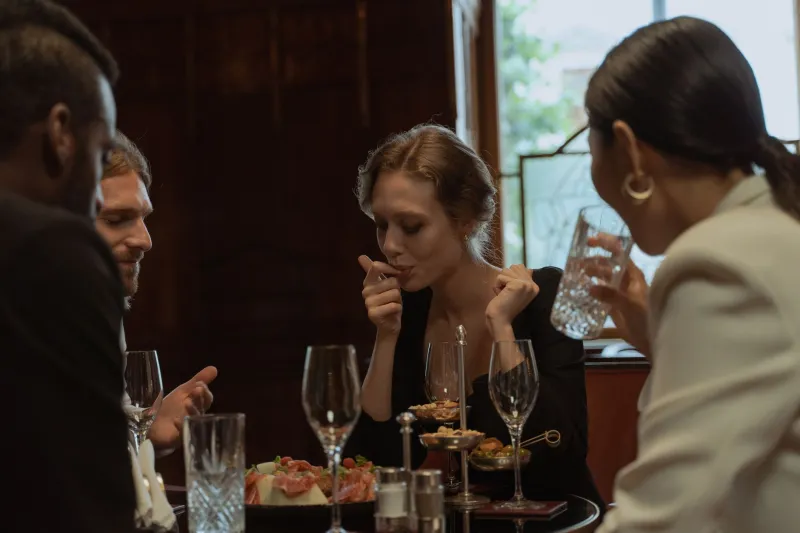
In Japan, the formal meeting is rarely where the real work happens. It is where positions are stated, cards exchanged, and courtesies observed. The genuine relationship — the one that determines whether a deal survives its first disagreement — is built afterward, in what the Japanese call the nijikai, the 'second gathering.' A shared dinner. A move to a second location. An evening in which nobody mentions the proposal on the table.
The Meeting Was Never the Meeting
American business culture treats the meeting as the unit of commerce. Japanese business culture treats the relationship as the unit, and the meeting as one scene within a longer play. This is not inefficiency; it is sequencing. A Japanese counterpart who seems to agree in the conference room may still be consulting internally for weeks. The dinner afterward is where hesitation surfaces, where the junior staffer who would never speak in the meeting quietly signals doubt to his manager, where the chemistry that no slide deck can measure finally gets tested.
Skip that scene, and you are negotiating with an organization you have never actually met.
Consider how this plays out in an American context. A Chicago manufacturer flies to Osaka, presents well, receives polite nods, and returns home confident. Three months of silence follow. What the traveler never learned — because they left the building at 5 p.m. — is that the division head had reservations that would have surfaced, gently, over sake that evening.
Why Americans Leave Early
The barriers are cultural and practical. We bill by the hour, so lingering feels expensive. We fear the appearance of impropriety, so dinner with a client feels like a compliance question rather than a relationship investment. And we have internalized a version of professionalism that mistakes formality for distance.
But the nijikai is not entertainment, and it is not schmoozing. It is structured informality — a deliberate space with its own rules. Nobody pitches. Nobody negotiates. The senior executive pours drinks for the junior colleague, reversing the hierarchy for an evening and making honesty possible. In Japan this is understood as part of the work. The bill, when it comes, is a business expense in the truest sense.
A Framework for the Third Act
American firms need not import the ritual wholesale to borrow its logic. Think of every client engagement in three acts:
Act One: The Formal Exchange. The meeting itself. Keep it disciplined and short. Its purpose is to create the conditions for Act Two, not to close anything.
Act Two: The Unstructured Hour. A meal, a walk, a ballgame — something with food or motion but no agenda. The only rule is restraint: no proposal talk. Watch what people do when they are not performing. This is where you learn whether the enthusiasm in the room was real.
Act Three: The Long Tail. The nijikai mindset should not end when the trip does. Build low-stakes touchpoints into the calendar — a note six weeks after delivery asking what has changed, not what has been purchased. The Japanese tradition of the mimai, the check-in that asks nothing, is the single most underused tool in American account management.
The Competitive Math of Staying at the Table
There is a hard-nosed case here, not just a sentimental one. In markets where products and pricing converge, the differentiator is the depth of the relationship — and depth is built precisely in the hours competitors are not spending. The firm that stays for the second location, that sends the check-in with no ask, is accumulating a form of trust that cannot be bought with a discount.
The oldest companies in Japan — the shinise that have traded for three, five, ten generations — did not survive on superior products alone. They survived on relationships maintained across decades, renewed in countless unhurried evenings. Their American counterparts churn clients every three years and call it the market.
The handshake is a beginning, not an ending. The discipline of staying at the table — physically, and across the years — is one of the most exportable ideas in Japanese business practice. It asks only for the one resource American professionals claim never to have: a little more time, given freely, before the deal is on the table.