Closed Until Ready: The Quiet Economics of the Empty Shelf

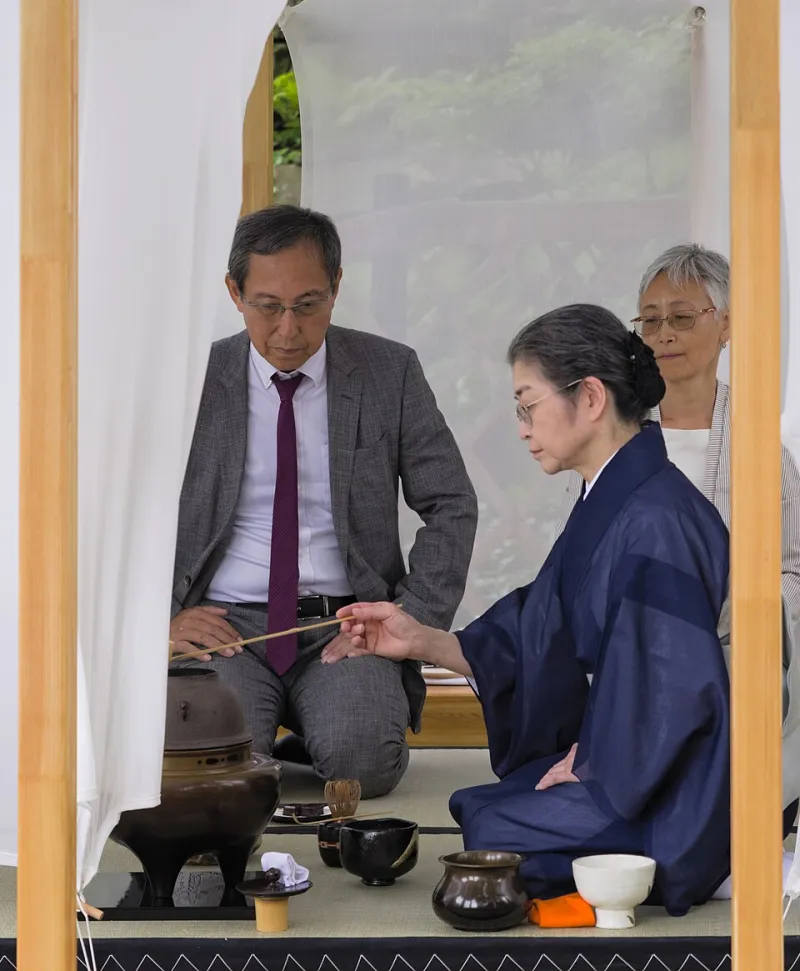
Photo: Dietmar Rabich, CC BY-SA 4.0, via Wikimedia Commons
There is a particular embarrassment most American retailers have never had to sit with: the empty shelf. In the dominant playbook, emptiness signals failure — a stockout, a forecasting miss, a lost sale that will appear in the quarterly review as a line item of regret. The instinct is to fill, discount, and apologize.
In parts of Japanese retail, the empty shelf is none of these things. It is a statement. It says the maker has decided the product is not ready, or the season is not right, or the quantity that can be made well is the only quantity that should be made at all. Scarcity, in this tradition, is not a marketing tactic grafted onto a business. It is the business.
A growing cohort of American founders is beginning to test whether that philosophy survives the crossing.
The Discipline of Not Selling
The concept behind what might be called misoshi restraint — deliberate, principled unavailability — runs against nearly every optimization American commerce has produced. Revenue dashboards reward velocity. Email platforms reward cadence. The flash sale has become the default heartbeat of direct-to-consumer retail, a discount engine that trains customers to wait for markdowns rather than pay full price.
Restraint inverts the training. When a Brooklyn ceramics studio announces that its next kiln opening is in eleven weeks, it is doing something more radical than building anticipation. It is renegotiating the terms of the customer relationship: we will not manufacture urgency, because the wait itself is the product's proof.
The economics, when practiced honestly, are counterintuitive but coherent. Limited production runs command full price because there is no surplus to discount. Margin improves not through pricing power alone but through the absence of clearance cycles. And customer acquisition costs fall over time, because a buyer who has learned to wait for your kiln does not need to be re-acquired — she is already watching the shelf.
What the Early Adopters Are Finding
Across the American boutique landscape, the pattern repeats with remarkable consistency. Small-batch apparel labels that cap production regardless of demand report sell-through rates that would make a conventional planner nervous and a margin analyst delighted. Specialty food brands that go dark between harvests — publishing nothing but a return date — find their email lists growing rather than churning during the silence.
The loyalty effects are the least surprising and the most durable. Behavioral research has long confirmed what the craft workshop knew: effort and waiting increase perceived value. A customer who waited four months for a hand-forged knife treats that knife differently than one purchased in a two-click checkout. The wait is the first chapter of ownership.
There is also a quieter operational benefit. Fixed, limited runs smooth production planning, reduce waste, and let small workshops price for craft rather than for volume — a theme familiar to readers of this site who have followed the case for pricing like a craftsman rather than selling hours.
The Risks No One Puts on the Landing Page
Honesty requires the other ledger.
The first risk is frustration, and it is not trivial. The American consumer has been conditioned for two decades by Amazon-grade immediacy. A brand that says closed until ready will lose impatient customers, and some of them will not come back. The model works only when the wait is paired with communication — dates, process updates, visible craft. Silence is not scarcity; silence is neglect.
The second risk is FOMO fatigue. The moment deliberate scarcity becomes a growth-hacking trick — manufactured drops, artificial countdowns, false limits — the entire moral structure of the practice collapses, and customers can smell the difference. Japanese restraint derives its power from being true. An American brand faking a waitlist is simply running a worse version of a flash sale.
The third risk is capital. Waiting for the kiln is a luxury of businesses with runway. Founders considering the model should model their cash conversion cycle before romanticizing it.
Training Customers to Wait
The deeper question is cultural, and it is where the Japanese tradition offers its most useful lesson. In the shinise model — the centuries-old shop — the customer is not a transaction to be maximized but a relationship to be stewarded across generations. Restraint is a feature of that stewardship. The shop does not sell everything it could, to everyone it could, whenever it could, because the shop is protecting something larger than the quarter.
For American leaders, the practical translation is a set of disciplines rather than a slogan:
- Cap production before demand caps your quality. Decide the number you can make excellently, and let that number be the story.
- Publish the calendar, not the countdown. Predictable scarcity builds trust; theatrical scarcity burns it.
- Communicate through the dark period. A closed shop with an open journal — process notes, sourcing, craft — converts waiting into belonging.
- Refuse the discount reflex. If the shelf is empty, the answer is a return date, not a coupon.
None of this scales in the venture-backed sense, and that is partly the point. The empty shelf is a strategy for businesses that intend to exist in twenty years, not twenty quarters.
The Shelf as a Statement
The American market has spent two decades optimizing for the fastest possible yes. The next decade may belong to companies confident enough to ask for patience — and disciplined enough to deserve it. The empty shelf, properly understood, is not an absence of product. It is a presence of standards.
The brands learning this are discovering what Kyoto's workshops have known since before the United States had a constitution: that the most persuasive thing a business can say is sometimes nothing at all, and the most valuable thing it can sell is the wait.