When the Room Goes Quiet: The Negotiation Discipline American Executives Keep Refusing to Learn

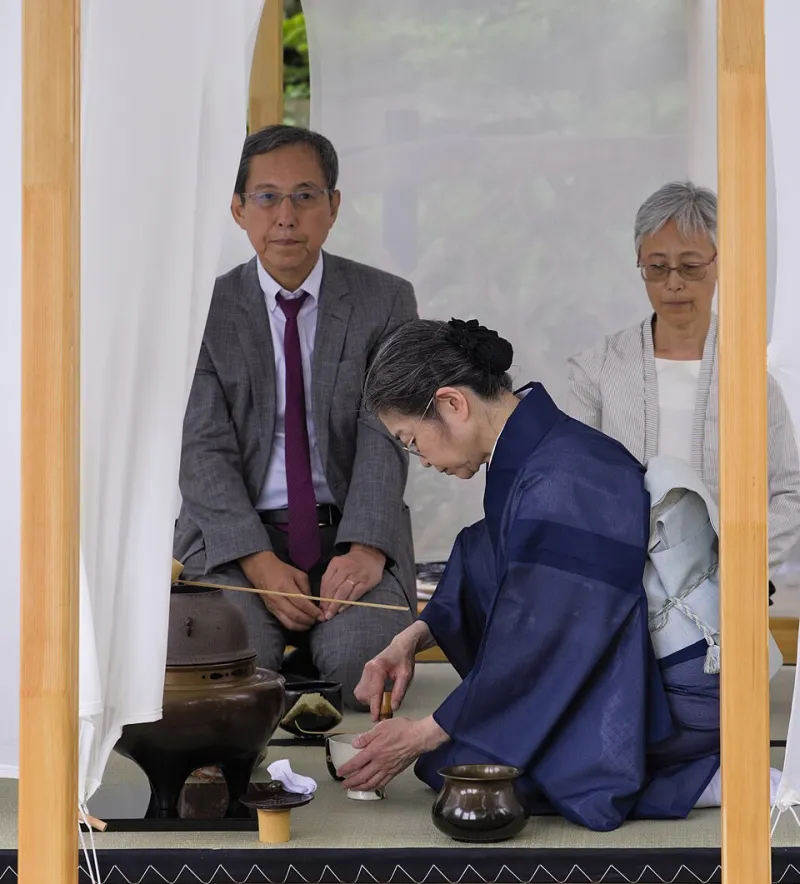
Photo: Alvaro A Novo, CC BY-SA 3.0, via Wikimedia Commons
The Six Seconds That Cost a Million
An American software firm once flew a delegation to Osaka to close a distribution agreement. The terms had been circulated for weeks. The local executives listened to the presentation, exchanged glances, and said nothing. Six seconds passed. Then eight. The American lead, visibly uneasy, reopened his laptop and offered a discount no one had asked for. The contract was signed that afternoon—at a price the Japanese side had expected to pay all along.
No one in the room had made a demand. The silence did it for them.
American business culture treats conversational gaps as malfunctions. We are trained from our first job interview to fill every pause, to project confidence through constant verbal motion. In the negotiation rooms of Japan, the opposite instinct prevails. Silence—chimmoku—is not an absence of communication. It is communication, delivered at a higher volume than words.
What the Pause Is Actually Saying
To read Japanese silence correctly, an American executive must first abandon the assumption that it signals confusion, disapproval, or a stalled deal. Often it signals the reverse: the matter is important enough to warrant genuine thought.
In practice, a pause in a Japanese negotiation can accomplish several things at once. It shows respect for what has just been said, treating the counterpart's words as deserving of reflection rather than instant rebuttal. It transfers pressure without a word being spoken—the party more comfortable in silence usually walks away with the concession. And it creates space for the internal consensus-building that Japanese firms conduct in real time; the pause you are experiencing may be your counterpart mentally consulting colleagues who are not in the room.
The nemawashi tradition of building agreement before the meeting means the formal negotiation is often a confirmation ritual, not a debate. Silence is where that confirmation happens. Rushing it is not merely impolite—it is strategically self-defeating, because it forces decisions before they are actually made.
Why American Boardrooms Flinch
The discomfort is not imaginary. Studies of conversational dynamics in the United States consistently find that gaps longer than a second or two trigger measurable anxiety in participants. We interpret silence as rejection, incompetence, or a power play being run against us—so we fill it, usually by giving something away.
Consider the standard American close: the salesperson names a price, stops talking, and waits. Veterans of the technique know that whoever speaks first after the number is named tends to lose ground. Yet most executives will spend years refining their pitch decks while never once training the single skill that most reliably protects margin: the capacity to sit still after speaking.
The asymmetry runs deeper than tactics. American deal culture prizes verbal agility, the rapid-fire exchange, the ability to "think on your feet." Japanese deal culture prizes deliberation. When the two meet, the American team often mistakes its own restlessness for momentum—and the Japanese team mistakes American fluency for carelessness. Both are wrong, but only one side is paying for the error.
Training the Muscle
Silence under pressure is a trainable discipline, not a personality trait. A few exercises have proven effective with the American executives we advise:
The ten-second rule. After your counterpart finishes speaking, count silently to ten before responding. It will feel theatrical for the first week. By the second week, you will notice how much you had been missing—half-answered questions, unstated objections, invitations to concede.
The named price. Practice stating your number and then physically stilling yourself: hands flat on the table, no notes to shuffle, no water to sip. The goal is not to intimidate but to demonstrate that the number requires no apology.
The silence audit. Record your next internal negotiation—a budget review, a vendor call—and mark every moment someone filled a pause with a concession, a hedge, or an unnecessary justification. Most first-time viewers are startled by the pattern.
The deliberate pause in writing. The discipline extends beyond the room. Resist the reflex to answer a difficult email within the hour. A considered reply the next morning often reads as strength; an instant one reads as anxiety.
Silence Is Not a Weapon—It Is a Room
A caution is warranted. Deployed cynically, silence curdles into gamesmanship, and Japanese counterparts are far better at this game than most Americans will ever be. The point is not to out-silence anyone. The point is to stop being afraid of the space in which real thought occurs.
The craft traditions this company draws upon—woodworking, ceramics, the long patience of the shinise, Japan's centuries-old family businesses—all share an understanding: the strongest part of any structure is often the emptiness it holds. A room is defined by its air, not its walls. A negotiation is defined by its silences, not its sentences.
The American executives who learn this do not become Japanese. They become harder to rush, more precise in their offers, and—perhaps most valuable in a market that rewards noise—genuinely worth listening to when they finally speak.