Stewardship Over Stock Options: The Edo-Era Answer to America's Succession Crisis
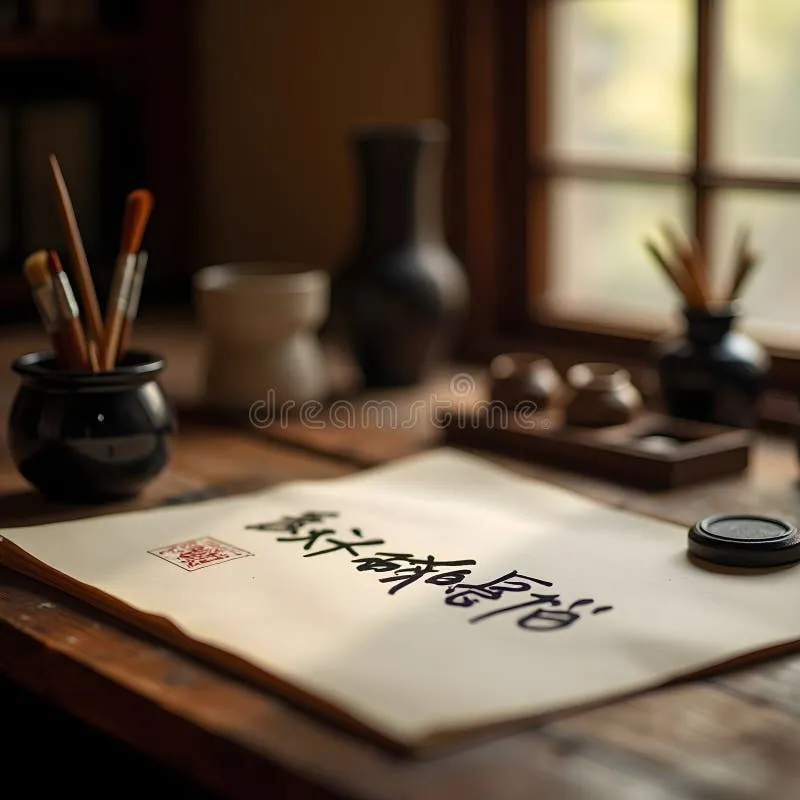
Photo: antique Japanese calligraphy inkstone on wooden desk warm light, via thumbs.dreamstime.com
Somewhere in America right now, a founder in her late sixties is reviewing a succession plan built like a term sheet. There is a valuation. There is a buy-sell agreement. There is an estate strategy involving grantor trusts and discounts. What there is not, in most cases, is a serious conversation about what the business is actually for.
This is not a niche concern. Roughly 4.5 million American businesses are expected to change hands over the next two decades as the Baby Boom generation retires — what analysts have called the Silver Tsunami. Estimates of the wealth involved run into the tens of trillions of dollars. And yet the failure statistics remain stubbornly grim: studies going back decades suggest that only about 30 percent of family firms survive into a second generation, and roughly 12 percent make it to a third.
Compare that with Japan, where more than 33,000 companies are over a century old, and where a handful of businesses — innkeepers, sake brewers, paper makers — have operated continuously for more than a thousand years. The contrast is not luck. It is a fundamentally different theory of what succession means.
The Inkstone That Outlived Its Maker
Consider the world of Edo-period Tokyo, then the largest city on earth. Among its merchants and artisans, a family business was not an asset to be liquidated or leveraged. It was a trust — something borrowed from previous generations and owed to future ones. The family's most treasured objects, a lacquerware merchant's seals, a calligrapher's inkstone passed down through the generations, were physical reminders that the shop's identity preceded any individual and would outlast them all.
This produced two practices that would look strange in an American boardroom, and both deserve a closer look.
First, the eldest son was not automatically the successor. Capability outranked birth order. If no capable heir existed within the bloodline, the family did not sell the shop. It recruited.
Adoption as a Talent Strategy
Mukoyōshi — the adoption of a son-in-law or capable outsider who takes the family name — is perhaps the most misunderstood institution in Japanese commercial history. In the merchant houses of Edo and later in industrial Japan, adopting a proven manager was neither a scandal nor a contingency. It was a standard governance tool.
Some of Japan's most famous companies were led this way. Suzuki, the automaker, has repeatedly passed leadership to adopted sons-in-law. So has the sake brewer that holds the record as one of the world's oldest continuously operating firms. The logic is simple: the continuation of the enterprise mattered more than the continuation of a particular genetic line. Blood was negotiable; the craft was not.
American founders, by contrast, face a narrower set of options: hand the keys to a child who may not want them, sell to a strategic acquirer or private equity fund, or wind down. The PE buyout has become the default exit — and it often means the business's identity, relationships, and institutional memory are treated as extractable value rather than a living tradition.
The Japanese alternative suggests a third path: identify the person, inside or outside the family, who will actually steward the enterprise — and formalize that choice early, deliberately, and without embarrassment.
Stewardship Is a Different Fiduciary Duty
The deeper difference is philosophical. American corporate law and culture treat the owner as the residual claimant: the business exists to generate returns for whoever holds it. Stewardship inverts this. The owner is a temporary custodian of something larger — a set of relationships, a standard of quality, a name that took generations to earn.
This is not sentimentality. It has hard economic consequences. A custodian thinks in centuries, which changes decisions about debt, reinvestment, customer concentration, and the pace of growth. A claimant thinks in exit horizons, which is why so many acquired companies are stripped of exactly the things that made them durable.
What American Founders Can Do Differently
None of this requires adopting Japanese legal forms. It requires adopting the underlying discipline. A few starting points:
Separate the name from the bloodline. Write the succession plan around the business's identity — its standards, customers, and craft — not around the family tree. If the best successor is a long-tenured employee or an outside manager, say so in writing, years before the transition.
Start succession a decade early. Edo-era merchant houses apprenticed heirs from childhood. American founders often begin succession planning eighteen months before retirement, which is roughly the difference between growing an oak and buying a sapling on moving day.
Create a stewardship charter. Beyond the buy-sell agreement, document what must never change: quality standards, treatment of long-term customers, supplier relationships, the reasons the business exists. This becomes the constitutional document for whoever inherits — related or not.
Redefine success for the second generation. The question is not "Can my child run this?" but "Does my child want to protect this, or merely own it?" An honest answer to the second question prevents the dishonest answer to the first.
The inkstone on the merchant's shelf was not valuable because it was old. It was valuable because every generation understood that they were holding it for someone else. America's founders have built remarkable enterprises. Whether those enterprises outlive them will depend less on the sophistication of their term sheets than on whether they can learn to think of themselves not as owners — but as the current keepers of the name.