The Service Nobody Sees: How Invisible Excellence Became America's Quiet Competitive Edge
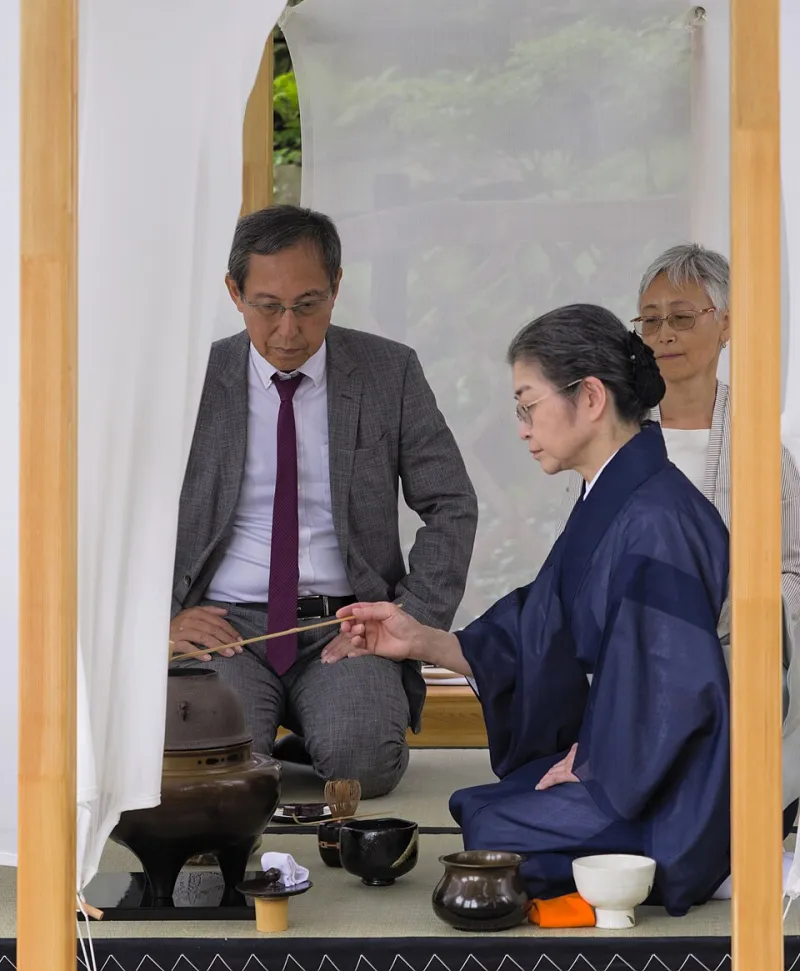
Photo: D-Kuru, CC BY-SA 4.0, via Wikimedia Commons
There is a saying in the Japanese tea tradition that the host prepares three cups of tea: one for the guest, one for the room, and one that is never poured — the cup prepared in the host's mind, anticipating needs the guest has not yet voiced. Western hospitality has long borrowed the surface of this idea. Far fewer American companies have absorbed its substance: that the truest measure of service is what happens when nobody is looking.
The Audit Problem
American business runs on measurement. Customer satisfaction scores, mystery shopper reports, Net Promoter surveys — we have built an entire infrastructure for evaluating the moments a customer can see. But this creates a blind spot with a cost attached. Teams learn, quite rationally, to polish the observable and neglect the invisible. The lobby gleams; the back hallway does not. The greeting is warm; the follow-through, once the customer signs, grows thin.
Japanese hospitality — omotenashi — inverts this logic. The word itself carries the sense of serving from the bottom of one's heart, without expectation of praise or even acknowledgment. In practice, it means the quality of the hidden work is held to the same standard as the visible work, because the hidden work eventually surfaces. A properly maintained kitchen shows up in the taste of the food weeks later. A meticulously prepared guest room shows up in how well the traveler sleeps.
What Invisible Service Looks Like in Practice
Consider a few examples already taking root in the United States:
- Hotel housekeeping playbooks built on anticipation. Several independent American hotel groups, studying Japanese ryokan operations, have retrained housekeeping teams to read the room as a record of the guest. A coffee cup moved to the far side of the desk suggests a left-handed guest. A charger left dangling from an outlet suggests an early departure. The next day's service is adjusted accordingly — silently, without a request being made.
- Logistics firms that pre-solve problems. Some regional freight and last-mile carriers now assign staff to review tomorrow's routes for weather, construction, and recurring access issues before dispatch, rerouting proactively. The customer never learns there was a potential delay. There is no ticket, no credit, no survey response — only the quiet absence of a problem.
- Software support teams that fix what wasn't reported. Rather than waiting for bug reports, some product teams treat error logs the way a ryokan's staff treats the garden: as something to tend before anyone notices a leaf out of place. The customer receives no email announcing the fix. They simply never hit the error.
In each case, the investment is made in a moment that cannot be marketed. That is precisely the point.
Why the Unseen Work Compounds
Invisible service operates like compound interest. No single act of anticipatory care moves a customer to write a review. But the accumulation — the package that arrived early, the room that felt effortless, the problem that never materialized — builds a reservoir of trust that is extremely difficult for competitors to identify, let alone replicate. A rival can copy your pricing page in an afternoon. They cannot copy a culture in which the night crew restocks the supply closet nobody inspects.
There is also an internal dividend. Employees consistently report greater pride in work that is done to a standard, not to a score. When a housekeeper knows her craft is valued even in the corners guests never enter, the job changes character. It stops being task completion and becomes stewardship. Companies that adopt invisible service standards often find they are simultaneously solving their retention problems, because the standard dignifies the work.
Building a Culture of the Unobserved
For American leaders interested in this shift, three practices matter more than any slogan:
- Audit the unaudited. Walk your operation backward, from the customer's least visible touchpoint to the most hidden internal process. Ask of each: would we do this differently if a customer were standing here?
- Reward the unmeasurable. If your incentive systems only track what surveys capture, you will get survey-optimized behavior. Create recognition — informal is fine — for problems quietly prevented.
- Hire for conscience, train for craft. Anticipatory care is a disposition before it is a skill. Skills can be taught in weeks; the instinct to leave a place better than you found it cannot be faked for long.
The Cup That Is Never Poured
The tea master's third cup is a parable about integrity of standard. It asks whether your quality is a performance or a character — whether excellence is something you show or something you are. American business has mastered the show. The next decade of competitive advantage may belong to companies willing to master the rest: the warehouse aisle no one walks, the handoff memo no one reads, the fix no one will ever thank them for.
Customers may never see that work. They will feel it. And feeling, unlike seeing, is what they remember.