The Inn That Never Forgets: Why Subscription Software Needs a Ryokan's Memory
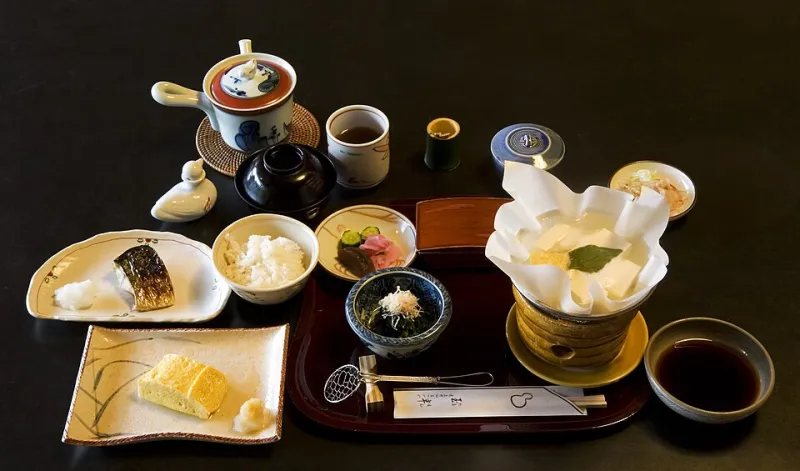
Photo: MichaelMaggs, CC BY-SA 3.0, via Wikimedia Commons
There is a category of Japanese inn, the ryokan, where the measure of success is not how many guests arrive but how many return. Some of these establishments have operated for centuries — the oldest, like Nishiyama Onsen Keiunkan, have welcomed guests for well over a millennium. They have survived wars, recessions, and every disruption short of the internet, and they did it without a growth team, a retention dashboard, or a single A/B test.
Now consider the average American SaaS company, which measures its life in monthly churn percentages and celebrates a 95% retention rate as excellence. A ryokan would find that number baffling — and not in a flattering way.
The argument of this piece is simple: subscription software companies are fighting churn with the wrong instruments. They are building better dashboards when they should be building better hosts.
What a Ryokan Actually Does
The Japanese word for this style of hospitality is omotenashi — service so attentive it anticipates need before the guest can express it, delivered without any expectation of thanks. At a great ryokan, the practice is concrete, not mystical:
- The welcome is personal. A guest arriving in summer heat is met with a cold towel and barley tea. Arriving with children? The room is already arranged with low futons and child-safe bath access. No one asked; the inn simply knew.
- Nothing surprises the guest — except pleasures. The itinerary, the meals, the costs: all confirmed before arrival. The only surprises are small, delightful ones: a different sweet with the tea, flowers chosen for the season.
- The staff remember. Return in October after visiting in April, and your preferred room, your tea preference, the conversation you had about your daughter's wedding — all of it is quietly honored.
- Service is invisible. Rooms are refreshed while guests bathe and dine. You never see the work; you only experience the result.
Notice what's absent: upsell prompts, satisfaction surveys, loyalty points. The ryokan's loyalty program is the relationship itself.
The Churn Problem Is a Hospitality Problem
American SaaS companies tend to treat retention as an analytics challenge: identify at-risk accounts through usage signals, trigger interventions, win them back. This is triage, not hospitality. It responds to dissatisfaction rather than preventing it.
The ryokan model suggests a different posture, one that would reshape how software teams think about their customers:
Onboarding as arrival. A ryokan guest is never handed a manual. A SaaS company practicing omotenashi would treat the first thirty days as a hosted arrival: a real human (or an experience indistinguishable from one) confirming goals, pre-configuring the workspace to the customer's context, and removing every step the customer didn't explicitly choose to take. The welcome email that says "let us know if you have questions" is the digital equivalent of a blank form at the front desk.
The no-surprise contract. Ryokans confirm everything in advance because surprise erodes trust. SaaS companies violate this constantly — price increases announced in billing portals, features deprecated by email, UI redesigns delivered without warning. Every surprise is a small betrayal that compounds into churn. Anticipatory communication — "here is what will change, when, and what it means for you specifically" — costs almost nothing and builds the trust that renewal depends on.
Memory as infrastructure. The ryokan remembers because remembering is the product. SaaS companies sit atop enormous behavioral data and use most of it to sell. Imagine instead a customer-success function whose explicit mandate is to use what it knows for the customer's benefit: pre-building the report the customer always asks for, flagging the workflow that will break under their coming headcount growth, greeting the renewal conversation with the history of what the customer achieved — not with a contract.
Invisible service. The best software experience, like the best ryokan stay, should involve noticing nothing — because everything simply worked. Every ticket a customer has to file is a moment the innkeeper failed to anticipate. That reframing changes what teams celebrate: not fast ticket resolution, but the shrinking number of tickets at all.
An Objection, and an Answer
The obvious rebuttal: ryokans host dozens of guests; SaaS companies host thousands. Personal attention doesn't scale.
But this mistakes the mechanics for the principle. Much of what a ryokan does is systematized attentiveness — checklists, seasonal rituals, a shared culture of noticing. Software companies are, if anything, better positioned: they can automate memory, automate anticipation, automate the no-surprise contract. The constraint is not technology. It is whether the organization decides that hospitality, not feature velocity, is the differentiator worth building for.
A Culture Question, Not a Playbook
At Miyake, we keep returning to the idea that modern business problems often have old answers. Churn is a modern word for an ancient phenomenon: the guest who does not return. The ryokan's answer was never a discount or a retention offer. It was a culture in which every employee, from the proprietress to the youngest server, treated anticipation of the guest's needs as the entire job.
Subscription companies that import that culture — not just the tactics — will discover what the innkeepers of Japan have known for four centuries: loyalty isn't won at renewal. It's won in a hundred unremarkable moments, long before the guest thinks of leaving.