Wrapped in Intent: Five Japanese Packaging Traditions Reshaping the American Unboxing Experience
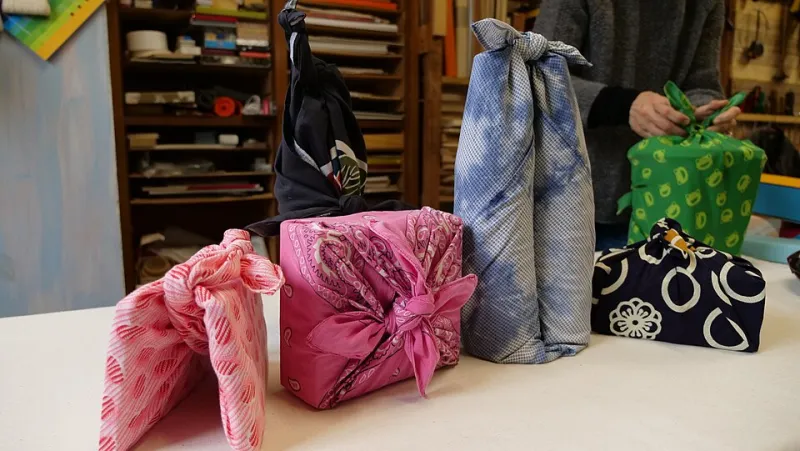
Photo: Culture Japon, CC BY-SA 4.0, via Wikimedia Commons
Somewhere between the rise of unboxing videos and the backlash against plastic mailers, American packaging underwent a quiet correction. The brands leading it — from direct-to-consumer startups to established retailers rethinking their e-commerce operations — have increasingly looked to Japan, where packaging has never been an afterthought. It is a language of respect, spoken through cloth, paper, and restraint.
Here are five traditions crossing the Pacific, and the business results following in their wake.
1. Furoshiki: The Wrap That Comes Back
The furoshiki — a square cloth used for centuries to carry and wrap goods — has moved from Tokyo department stores to American boutique shelves. A handful of US apparel and cosmetics brands now ship products in branded cloth wraps that customers reuse as tote bags, scarves, or gift wrap.
The business case is twofold. First, the cloth itself becomes a second branded touchpoint, circulating through farmers markets and gyms long after the sale. Second, it eliminates a portion of single-use packaging: early adopters report meaningful reductions in per-order packaging spend once cloth wraps replace boxes for smaller items. When the wrap is the product's keepsake, waste becomes marketing.
2. The Kraft Minimal Aesthetic
Japanese packaging has long favored unbleached papers, muted inks, and a near-total absence of printed clutter. The look communicates honesty: the product, not the container, is the event.
American brands have noticed that restraint photographs beautifully. Minimal kraft-and-black-ink packaging has become a staple of premium direct-to-consumer categories — coffee, skincare, specialty food — precisely because it signals craft without shouting. The measurable outcome shows up in price tolerance: shoppers consistently rate the same product as more premium in pared-back packaging, allowing brands to hold higher price points without discounting their credibility.
3. The Ritual of Layers
In Japanese gift-giving, the act of unwrapping is as considered as the gift itself: an outer layer, an inner layer, a folded closure that asks to be undone in sequence. US e-commerce brands have adapted this as the structured unboxing — tissue folded rather than stuffed, a card placed on top rather than buried, components revealed in a deliberate order.
The payoff is social. Unboxing content remains one of the highest-leverage organic marketing channels available to small brands, and a package designed as ritual generates the kind of video a brand could never stage. Companies that redesigned their unboxing sequence report measurable lifts in user-generated content and repeat purchase rates — customers who feel celebrated come back.
4. Right-Sized Precision
Japanese packaging tradition abhors excess: a box should fit its contents the way a garment fits a body. American logistics is arriving at the same conclusion for harder-nosed reasons. Dimensional weight pricing, rising carrier surcharges, and sustainability mandates have made oversized boxes expensive in every sense.
Brands adopting right-sized packaging — custom inserts, adjustable box systems, minimal void fill — report double-digit reductions in shipping costs and dramatic cuts in packaging waste. The Japanese influence is in the framing: what began as an efficiency project is now marketed to customers as care. A package that fits is a package that respects.
5. The Written Note
Perhaps the smallest tradition is the most durable. In Japan, a wrapped gift is frequently accompanied by calligraphy — the giver's name, the occasion, a season's greeting. American brands have translated this into the handwritten or hand-set note: a thank-you card, a founder's signature, a line of ink on uncoated paper.
It costs cents and returns disproportionate goodwill. Customer service teams report that orders including a personal note generate noticeably higher review rates and warmer support interactions. In an era of automated everything, a human hand on paper is a competitive differentiator that cannot be replicated at scale — which is exactly the point.
Less Packaging, More Meaning
What unites these five practices is a shared premise: packaging is not overhead. It is the first physical conversation a brand has with its customer, and Japanese craft tradition has been refining that conversation for centuries.
American companies adopting these methods are not merely chasing an aesthetic. They are discovering that cloth, restraint, ritual, precision, and a handwritten note translate directly into numbers — lower costs, higher perceived value, stronger loyalty. The wrap, it turns out, was never just wrapping.