After the Bow: What American Business Keeps Throwing Away in the Leftover Minutes
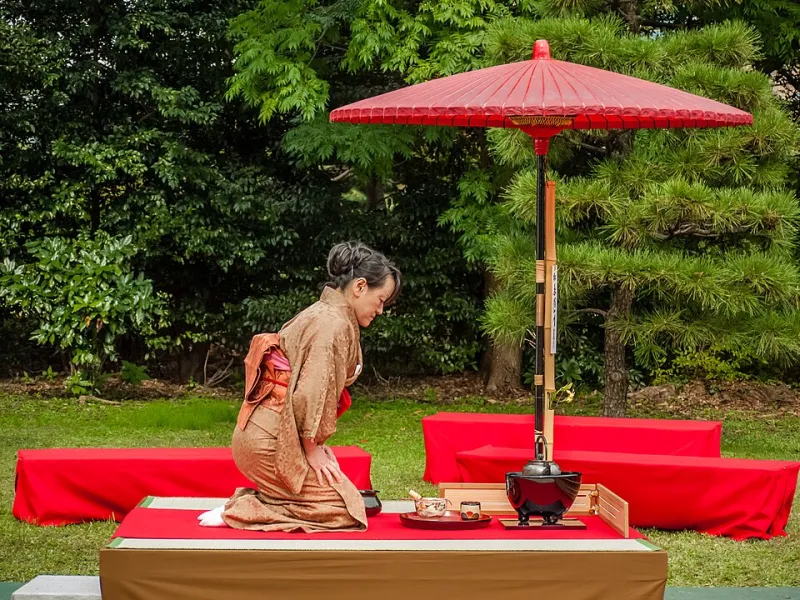
Photo: Ermell, CC BY-SA 4.0, via Wikimedia Commons
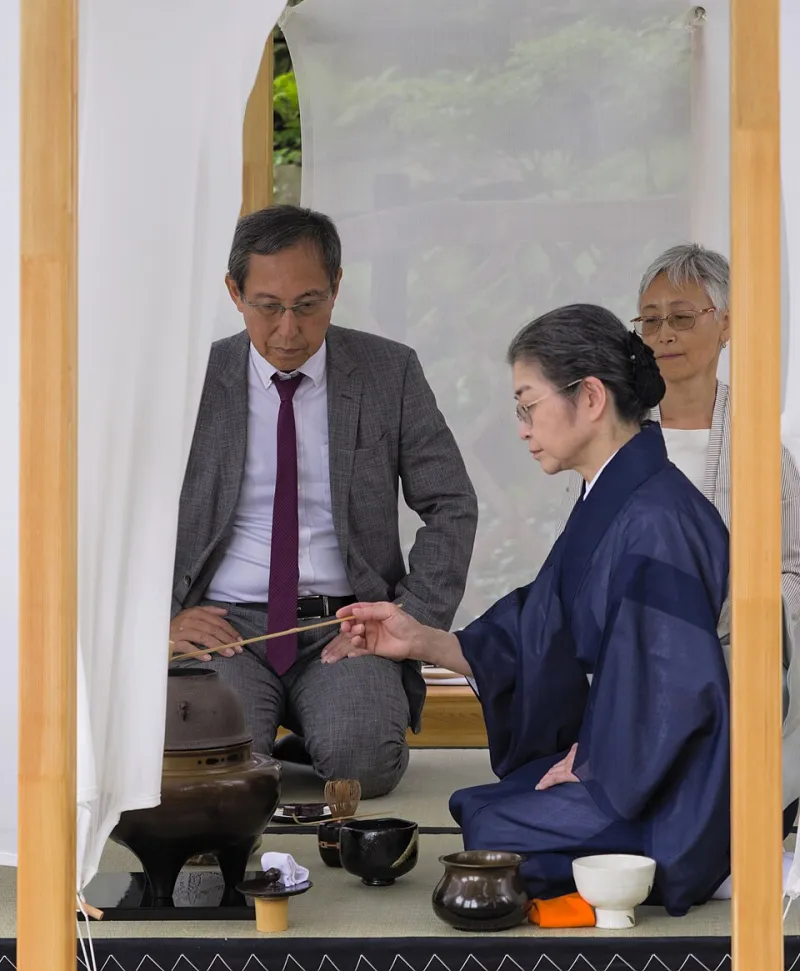
There is a moment in every traditional Japanese tea gathering that the untrained eye mistakes for nothing at all. The sweets have been served, the bowl of matcha has been drunk, the host and guest have exchanged their formal words of gratitude. And then — the conversation continues. Loosely. Without script. The guests may comment on the scroll in the alcove, the season's flowers, the craftsmanship of the kettle. This is the desh of the gathering, the afterglow, and seasoned practitioners will tell you it is where the true relationship between host and guest is quietly sealed.
American business has no equivalent — and worse, we have engineered the moment out of existence.
The Meeting That Ends Too Early
Consider the anatomy of a typical client interaction in the United States. A calendar invite with a hard stop. An agenda distributed in advance. A Zoom call that begins with thirty seconds of small talk before someone says, "Well, let's go ahead and get started." The business concludes, and the call ends — often mid-sentence, as the next meeting's waiting room admits the participants.
Nothing was done wrong, exactly. Everything was done efficiently. And yet the relationship advanced not at all, because the relationship was never the agenda. The agenda was the transaction. The relationship lives in the minutes we've classified as waste.
Japanese business culture never made this classification. The nomikai after the negotiation, the walk to the taxi, the seemingly endless farewells at the elevator — none of it is incidental. It is the second meeting, the one where the first meeting gets understood. A Japanese executive once remarked to me that the deal is decided in the room but shaped in the hallway afterward. American professionals tend to treat the hallway as a corridor between obligations. Their counterparts treat it as the obligation.
Where the Real Information Lives
There is a practical argument here, not merely a sentimental one. Unstructured time is where the unsolicited truth surfaces.
In a formal meeting, every participant is performing. The deck is polished, the objections are rehearsed, the enthusiasm is calibrated. But on the walk to the parking garage, a client's guard drops just enough. They mention that their new CFO is skeptical. They admit the rollout is behind. They ask, almost offhandedly, whether you've ever handled anything like their situation. None of this would survive contact with an agenda item labeled "Open Discussion" — because open discussion is still on the record. The parking lot is not.
The same applies internally. The performance review captures the employee's prepared narrative. The casual two minutes after the meeting captures whether they're actually okay. Managers who consistently learn things "by accident" in hallways are not lucky. They have simply preserved channels their organizations have paved over.
The Efficiency Trap
Why do American companies keep eliminating these moments? Because they are legible costs with illegible returns. The fifteen minutes after a client dinner can't be logged as pipeline activity. The phone call after the invoice — not about payment, just about whether the product is working — doesn't fit a CRM field. So it gets trimmed, then eliminated, then forgotten as a possibility at all.
But the client who leaves over what you never say rarely leaves over the work. The work was fine. They left because after three years, the vendor relationship still consists entirely of deliverables and invoices. There was never a moment where anyone asked how they were holding up, or noticed the change in their tone, or remembered the name of the successor they mentioned once, in a hallway, in a minute nobody scheduled.
Designing for the Leftover Minutes
The remedy is not to mandate forced spontaneity — a contradiction that fooling no one. It is to stop structuring time so tightly that nothing leftover can exist.
End meetings ten minutes before the hour, and mean it. Most American meetings run to the bell precisely because the calendar says so. Protect the buffer and let people linger. Some won't. The ones who do will tell you things.
Move the walk into the relationship. The Japanese senpai-kohai tradition understands that side-by-side conversation — walking, driving, doing — unlocks candor that face-to-face conversation seals shut. Substitute one video call a month for a phone call taken while walking. Watch what changes.
Make the post-invoice call a ritual, not a collections tactic. One call, two weeks after delivery, with no agenda beyond "Is it actually working?" This is the otsumuki of commerce — the closing bowl that confirms the gathering mattered.
Host the afterglow deliberately. Japanese tea masters design the toriniwa, the transitional space between garden and tea room, precisely so guests can shed formality on the way in. Your equivalent: the extra fifteen minutes at the client dinner, the lobby conversation, the note sent the next day referencing something said after the meeting ended. Design the transition, and the truth will use it.
The Long Arithmetic of Loyalty
None of this appears on a dashboard this quarter. That is precisely the point — and precisely why it works. The practices that compound quietly are the ones your competitors, measuring everything, will never copy.
The tea ceremony's final minutes are not an afterthought to the ceremony. They are the ceremony's proof that the host wanted the guest to stay, not merely to be served. American business has become exquisitely good at serving and astonishingly bad at wanting. Clients can tell the difference. They always could.
The third cup is poured for the person who stayed past the formal end. Make sure you're still there to pour it.