Before the Pitch, the Pour: Rethinking the First Hour of the American Client Meeting
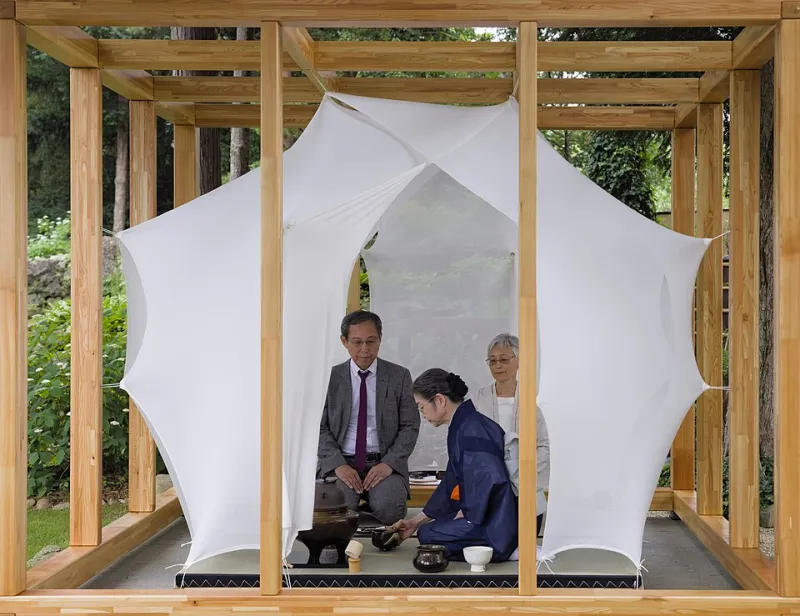
Photo: D-Kuru, CC BY-SA 4.0, via Wikimedia Commons
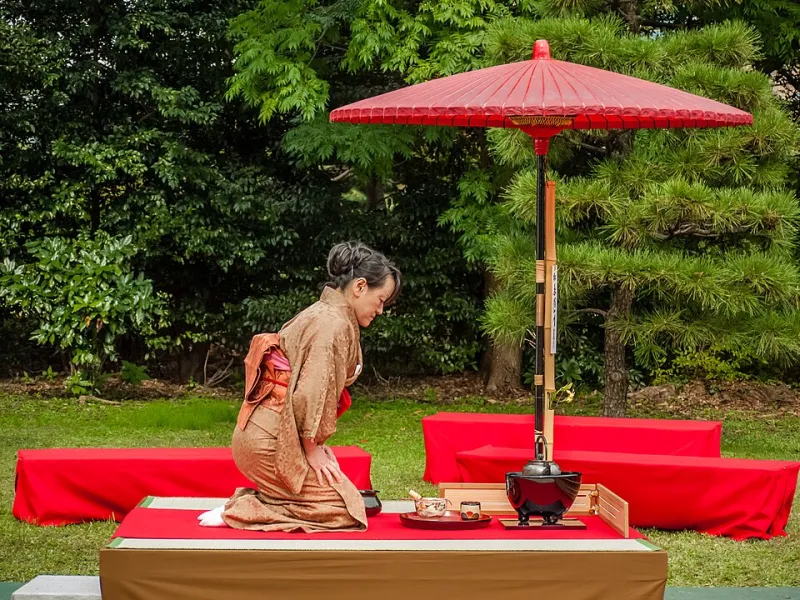
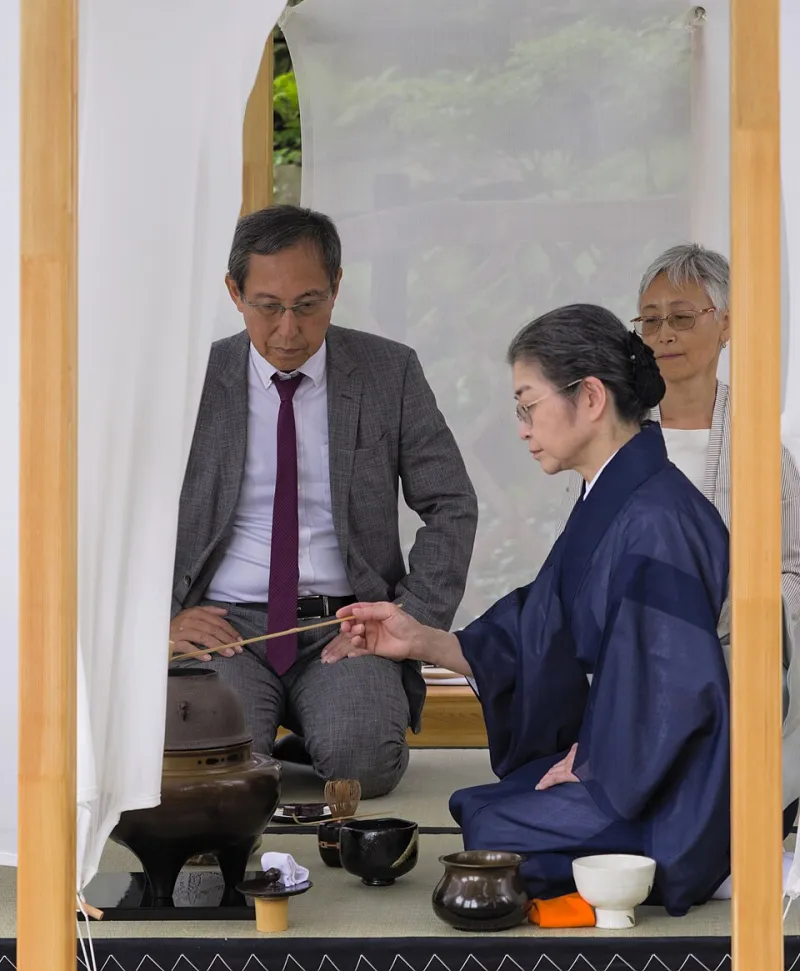
There is a moment in every traditional tea gathering, or chakai, that a first-time observer tends to miss. The host does not begin with the tea. The guest is welcomed at the gate, guided through the garden, paused at the tsukubai water basin to rinse hands and set aside the dust of the street. Only after all of this—deliberately slow, deliberately unproductive—does anyone sit down together. By the time the bowl arrives, the relationship already exists. The tea merely confirms it.
American business culture, raised on the calendar invite and the fifteen-minute buffer, has historically inverted this sequence. We open with business and, if time permits, we close with rapport. A quiet countercurrent is now forming among firms that sell trust rather than widgets—advisory practices, architecture studios, boutique manufacturers—and it looks a great deal like the tea room.
The Efficiency Trap
The standard American client meeting is a marvel of optimization. Agenda distributed in advance. Timeboxed discussion items. Action items assigned before the coffee cools. It is a format built for transactional work, and for that work it functions admirably.
But long-horizon B2B relationships are not transactions. They are partnerships measured in years and, ideally, decades. When the first hour of a relationship is spent entirely on capability decks and pricing tiers, both parties walk away with information but no feel for one another. And feel—judgment about whether this person will answer the phone at 7 a.m. when something breaks—is what actually closes durable deals.
The tea tradition names this problem precisely. In chanoyu, the ritual is not a preamble to the meaningful part. The ritual is the meaning. The whisking of the matcha, the careful rotation of the bowl, the prescribed words of respect—these are not obstacles between strangers and commerce. They are the mechanism by which strangers stop being strangers.
What American Firms Are Doing Instead
The adaptations showing up across the United States rarely look Japanese on the surface, which is rather the point. A commercial real estate brokerage in Denver now opens every new-client engagement with a walking tour of the property in question—no slides, no agenda, just the building and a conversation that goes wherever the building leads. A Midwest-based ERP consultancy begins implementations with a shared meal at a restaurant chosen by the client, on the theory that you learn how an organization really works by watching how its people behave when the laptop is closed.
One aerospace supplier in Wichita institutionalized something even simpler: the first meeting with any prospective partner is a plant tour conducted by a line machinist, not a salesperson. The prospect sees the floor, the scrap bin, the break room. Nothing is polished. Everything is revealing.
What these rituals share is a refusal to transact in the first hour. They create what the tea tradition calls ichi-go ichi-e consciousness—the recognition that this particular gathering will never happen again, and is therefore worth treating as singular rather than interchangeable.
A Framework for the No-Agenda Touchpoint
For leaders convinced but unsure where to begin, a simple structure helps. We think of it in four movements, borrowed loosely from the arc of the tea gathering itself.
First, the threshold. Design a deliberate entry point that signals the shift from ordinary time to relationship time. It can be a walk between offices, a tour, a meal. The content matters less than the signal: we are now doing something that cannot be rushed.
Second, the surrender of control. An agenda is a form of control. A no-agenda touchpoint requires the host to trust that conversation will find its own useful ground. In practice it almost always does—clients raise the real issues precisely because nobody forced them onto a slide.
Third, the constraint of time. Paradoxically, unstructured time needs a container. Ninety minutes, clearly protected, works better than a vague afternoon. The tea ceremony is unhurried but never formless; its choreography creates the freedom inside it.
Fourth, the return. Every ritual ends with reentry into ordinary time. Close the touchpoint with a brief, human acknowledgment of what occurred—not a recap of action items, but a genuine word about the hour just shared. Then, and only then, the follow-up email.
The Long Arithmetic
Skeptics will do the math and object. Two hours of unstructured hospitality per new client, multiplied across a pipeline, looks like pure cost. But this accounting measures the wrong thing. A first meeting that produces rapport instead of merely producing notes compresses every subsequent interaction. Due diligence shortens. Objections surface earlier and more honestly. Renewal conversations begin from a foundation rather than from zero.
The tea masters understood something that American business, for all its dashboards, is only now relearning: trust is not a conclusion people reach. It is an atmosphere they breathe. The best client meetings, like the best cups of tea, end before anyone has gotten down to business—because the business was never the point of getting together.